Why decarbonization only works as a system
Decarbonization is often described as a technological challenge: more renewable energy, more electrification, more efficiency. But this perspective falls short. Even the best individual measures have limited impact if they are not considered within a broader context.
In a recent interview with "The Choice powered by ESCP", Eric Stab, CEO of ENGIE Deutschland, makes exactly this point: decarbonization can only succeed if it is understood as a system.
What may sound abstract at first describes, in practice, one of the greatest challenges of the energy transition. Because although many solutions are already well known, we see repeatedly that progress does not happen automatically by improving or scaling individual technologies.
Rather, the success of decarbonization is determined elsewhere — precisely where solutions meet.
From Individual Building Block to Integrated System
In recent years, the focus has been heavily on the development and implementation of individual technologies. The expansion of renewable energy has been driven forward, industrial processes have become more efficient, and new applications for electrification have been developed.
All of these measures are important. But they only reach their full potential when they are part of an integrated system.
One example of this systemic approach is ENGIE's strategic direction: the "alliance of green electrons and molecules". Behind this lies the conviction that successful decarbonization cannot be achieved by renewable electricity alone, nor by green gases alone. Rather, both energy carriers must be deployed where they play to their respective strengths. While green electrons efficiently power heat pumps or electric vehicles, green molecules such as hydrogen or biomethane enable the decarbonization of industrial processes and heavy-duty, maritime, and aviation transport. Only their coordinated interplay creates the conditions for a climate-neutral energy system.
As Eric Stab emphasizes in the interview, it is not enough to look at individual solutions in isolation. What matters is understanding how energy, infrastructure, and behavior interact — and how these areas can be deliberately connected.
This perspective marks a turning point. It makes clear that decarbonization is not only a question of technological innovation, but above all a question of integration.
Where Things Break Down in Practice
Despite this awareness, many measures continue to be planned and implemented in isolation. This can be seen in a variety of contexts:
- An industrial company electrifies parts of its production — but the required renewable energy is not available in sufficient quantities.
- A city invests in renewable electricity generation — but heat supply and mobility remain largely uncoordinated.
- A company sets ambitious climate targets — but large parts of the value chain are not consistently included.
The result is progress that is visible but frequently falls short of its potential.
Not because solutions are lacking — but because the solutions are not sufficiently interconnected.
Case study: Systems thinking in industry
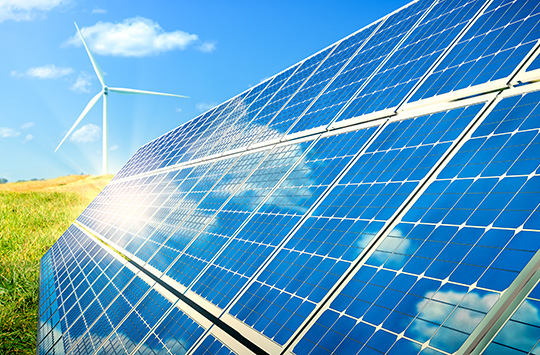
What systemic decarbonization can look like in practice is demonstrated by ENGIE's project with industrial company Staehle. Rather than implementing isolated measures, a holistic energy concept was developed — from the use of industrial waste heat, to heat pumps, to the integration of renewable energy. This illustrates that even well-designed, integrated solutions must prove themselves within a complex system.
Systems Thinking as a Practical Task
The term "systems thinking" is often used in the abstract. In practice, however, it means something very concrete: the deliberate design of interconnections.
Central questions include:
- How does electrification change energy demand?
- What infrastructure is needed to reliably meet that demand?
- What role do storage, flexibility, and digital control play?
- How do economic incentives and user behavior influence the overall system?
Systems thinking does not mean solving everything at once. Rather, it means identifying the relevant interdependencies and taking them deliberately into account.
A New Perspective on Decision-Making
This new perspective also changes how decisions are made. Instead of optimizing individual projects in isolation, the key question becomes how measures fit into a larger framework.
For companies, this means understanding decarbonization not merely as the technical retrofitting of individual assets, but as a strategic transformation across the entire value chain.
For cities and infrastructure providers, cross-sector planning becomes increasingly important — for example, by linking energy, heat, and mobility systems.
And at the policy level, it becomes clear that regulatory frameworks must be designed not only to promote individual measures, but to enable them to work together.
The Role of Interfaces
A central aspect of systems thinking is the interfaces between different domains. The complexity becomes particularly evident in the interplay between market mechanisms and infrastructure.
Context: When the market gets complex
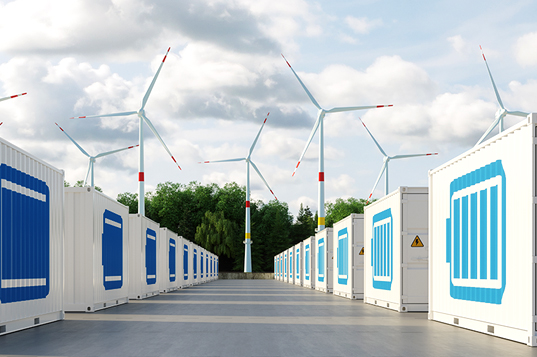
The implementation of the energy transition remains complex — as shown in this article on battery storage in Germany. While the rollout of BESS systems is booming, economic success depends heavily on marketing strategies, regulatory conditions, and risk management. Even central technologies of the energy transition do not deliver impact automatically.
This is where it is determined whether individual solutions combine into a functioning overall system. Interfaces may be technical in nature — for example, between the electricity grid and industrial applications — but they can also be organizational or economic in character.
These transitions are often difficult to standardize. At the same time, they offer enormous potential: this is where efficiency gains can be realized, emissions reduced, and new business models developed.
The challenge is to treat interfaces not as by-products, but as central components of the transformation.
Conclusion: Thinking Decarbonization as an Interconnected Whole
Decarbonization today is less a question of missing technologies than a question of integration. Or to put it differently: the challenge is not to find new solutions, but to connect existing solutions with one another.
That is the core message from Eric Stab in his conversation with "The Choice powered by ESCP" — and at the same time one of the most important tasks for the years ahead. Read the full interview in English here.
Our Expert

Articles you might also be interested in
Electric Heavy-Duty Transport: From Pilot Project to Nationwide Fast-Charging Network

Data Centers as System Partners of the Energy Transition: Flexibility, Heat, and Renewable Energies
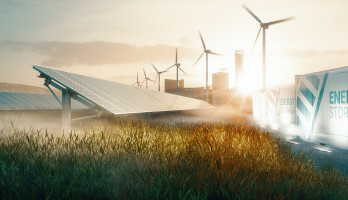
How Power Purchase Agreements (PPAs) are becoming key to climate neutrality
Green Power PPAs Drive Industrial Decarbonization: An Overview of Opportunities, Challenges, and Regulatory Frameworks.
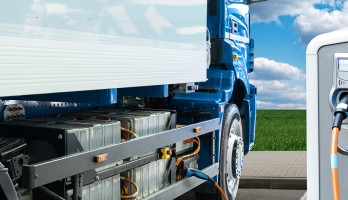
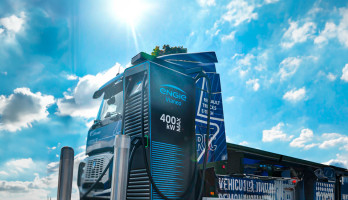
"Downtime Becomes Charging Time" – How PORT OF KIEL is Electrifying Heavy-Duty Transport with ENGIE
How the PORT OF KIEL is expanding charging infrastructure for electric trucks with ENGIE: 400 kW fast charging, AFIR targets, and the future of electric heavy-duty transport.

Impulse #28: The Energy Transition Requires Systems Thinking
Energy policy requires systemic thinking: Eric Stab from ENGIE Germany explains how international experience can advance the German energy transition. Read now!

A decade of change: ENGIE and the path to energy transition
150 years of history, 10 years of ENGIE: a look back at history, people, and the ambition to make the energy transition and climate neutrality measurable.

How data centers actively support the energy transition
Data centers are becoming energy hubs and playing a key role in the energy transition. Discover the opportunities.
Power for heavyweights – How ENGIE Vianeo is driving forward electric mobility for trucks
Find out how ENGIE Vianeo is accelerating truck electromobility in Europe.

Impulse #27: Tackling decarbonization
Taking action on decarbonization: Niklas Wiegand from ENGIE Germany blogs about sustainable solutions for cities, industry, and buildings. Read now!
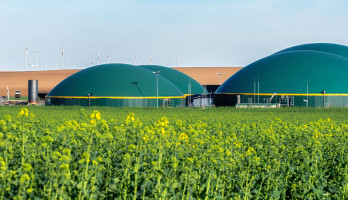
Biomethane – making energy supply climate neutral
Biomethane can make industry, heat supply and mobility more climate-friendly. Read more about this underestimated energy source.