How Power Purchase Agreements (PPAs) are becoming key to climate neutrality
The transition to climate neutrality has long been more than just a technological project. It is a stress test for the economic system and one of the central industrial policy challenges of our time. Germany aims to become climate neutral by 2045, and the EU is pursuing similar goals. But how can climate protection, competitiveness, and security of supply be ensured simultaneously?
A key answer lies in an instrument that was long considered a niche: green power PPAs.
Climate neutrality requires more than regulation
The government sets guidelines: With the Renewable Energy Act (EEG), the European Emissions Trading System, and new industrial policy instruments such as electricity price compensation or a planned industrial electricity price, a broad range of tools is available.
But these measures share a common weakness: they do not automatically guarantee that affordable renewable electricity reaches industry. This is where market-based solutions come into play.
From Niche Product to Strategic Tool
Power Purchase Agreements (PPAs) are long-term electricity supply contracts between renewable energy producers and consumers - often industrial companies. What was once a specialized tool is now evolving into a strategic building block of decarbonization.
PPAs enable:
- the construction of new wind and solar farms without government subsidies
- the continued economic operation of older plants
- stable and predictable electricity prices
- direct reduction of emissions (Scope-2)
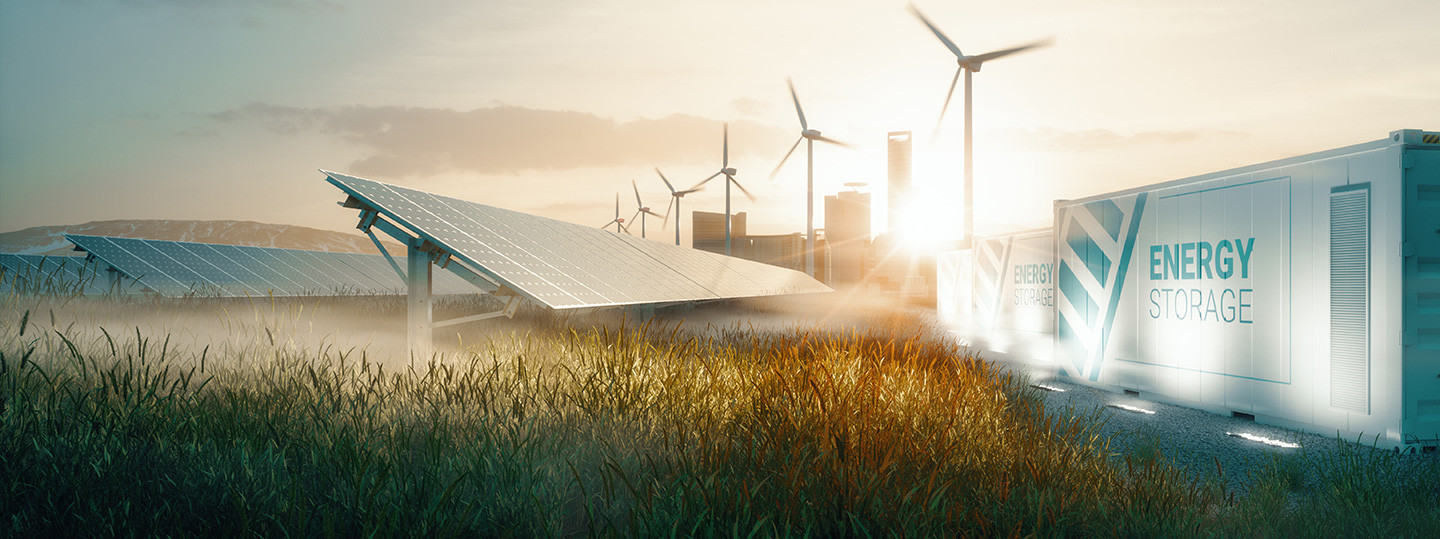
In practice, structured PPA portfolios are increasingly emerging, often combining wind, solar energy or BESS. Complemented by spot market balancing and energy management, a new, market-based supply model is emerging.
When Subsidies Become a Risk
A particularly sensitive issue is the further development of the EEG. The EU requires a transition to so-called bilateral contracts for difference (CfDs).
The idea:
- The government compensates for low market prices.
- High market prices are partially skimmed off.
Regulatory sense—but with side effects:
- fewer price incentives for operators
- potentially rising subsidy costs
- Uncertainty regarding future PPA offers
Above all, it remains unclear: Will unsubsidized direct marketing—and thus a key PPA channel—remain in place? Many market players are therefore calling for PPAs to be systematically integrated into support mechanisms, for example through advantages in tenders or through the most flexible possible switching between CfDs and PPAs.
Electricity Price Compensation as a Driver for the PPA Market
Electricity price compensation (SPK) is a key support instrument of German industrial policy. It is intended to relieve energy-intensive companies of indirect CO₂ costs that are passed on via the electricity price within the framework of the European Emissions Trading System.
The German government recently adapted the electricity price compensation to the recently updated European ETS state aid guidelines; the new Directive is still formally subject to state aid approval by the European Commission.
The subsidy is tied to environmental obligations. Among other things, companies must demonstrate measures for decarbonization and energy efficiency or cover a portion of their electricity needs with renewable energy. PPAs are gaining relevance in this context, as they enable the long-term procurement of green electricity while also helping to meet regulatory requirements. For many companies, they are thus becoming not only a tool for decarbonization but also a key component of their funding and procurement strategy. While electricity price compensation is already influencing demand for PPAs today, the planned industrial electricity price could further reinforce this trend in the future.
Industrial Electricity Price: Opportunity or Intervention?
With the industrial electricity price, the German government has created an additional subsidy framework for energy-intensive companies for the period 2026 to 2028.
At least 50 percent of the funding must be reinvested by the beneficiary companies in decarbonization measures, with Power Purchase Agreements (PPAs) also considered a permissible option. At the same time, the funding is time-limited and subject to strict regulatory constraints. Practitioners are therefore calling for greater flexibility in PPA models and the establishment of a stable long-term framework.
New Rules, New Reality
At the same time, requirements for sustainability reports are becoming stricter. The Greenhouse Gas Protocol is being revised—with potential consequences:
- Temporal accuracy: Transition to hourly reconciliation of electricity consumption and generation
- Geographical proximity: stricter geographical requirements
The result is that companies will need to develop more complex solutions in the future:
- hybrid PPA portfolios
- Combination of different technologies
- Use of storage and flexibility
PPAs are not becoming any simpler—but they are becoming strategically more important
Between progress and uncertainty
From a practical perspective, the picture is mixed.
Challenges:
- regulatory uncertainty (CfDs, grid fees, CO₂ prices)
- complex verification rules
- Uncertain future of direct marketing
Progress:
- Faster approvals
- Greater market orientation of renewables
- More realistic electricity prices through new market mechanisms
An example: The shift in electricity trading to quarter-hourly pricing better reflects the reality of a renewable energy system.
A Look Abroad: What Other Markets Do Better
A look at North America or Northern Europe shows that where stable framework conditions prevail, PPA markets grow much more dynamically. There, PPAs are not considered a special solution, but rather a standard instrument for electricity procurement. The market is also maturing in Europe. Companies are increasingly paying attention to:
- Contract structure
- Risk profiles
- Supply characteristics
In addition to traditional long-term contracts, more flexible, shorter-term PPAs are also gaining importance.

„Power Purchase Agreements are no longer just a tool for purchasing renewable electricity—they help determine how companies participate in Europe’s decarbonized energy system today and in the future.“
— Sarah Drevermann, Senior Lead Originator cPPAs at ENGIE
Conclusion: PPAs as a Bridge Between Policy and the Market
The transition to climate neutrality depends not only on political goals but also on concrete investments. This is precisely where green power PPAs demonstrate their strength: they link government policy frameworks with market-based implementation.
For companies—especially in energy-intensive industries—PPAs are increasingly becoming a strategic tool. They secure access to renewable electricity, create price stability, and strengthen supply security and competitiveness in a changing energy system.
However, for this potential to be fully realized, reliable and consistent framework conditions are needed. Regulatory uncertainties can slow down investments and hinder market development. Regulatory policy must therefore facilitate markets—not overshadow them.
At the same time, it is clear that PPAs are evolving. With rising demands for transparency, temporal accuracy, and system integration, they are becoming more complex but also more effective.
The key insight: Climate neutrality is achieved most efficiently when policymakers set clear guidelines, markets function effectively, and companies take active steps. PPAs are a crucial link in this process.
Our Expert

Articles you might also be interested in
Electric Heavy-Duty Transport: From Pilot Project to Nationwide Fast-Charging Network

Data Centers as System Partners of the Energy Transition: Flexibility, Heat, and Renewable Energies
Why decarbonization only works as a system
Decarbonization only works as a system: Eric Stab explains why individual measures are not enough and why integrated solutions are essential.
"Downtime Becomes Charging Time" – How PORT OF KIEL is Electrifying Heavy-Duty Transport with ENGIE
How the PORT OF KIEL is expanding charging infrastructure for electric trucks with ENGIE: 400 kW fast charging, AFIR targets, and the future of electric heavy-duty transport.

Impulse #28: The Energy Transition Requires Systems Thinking
Energy policy requires systemic thinking: Eric Stab from ENGIE Germany explains how international experience can advance the German energy transition. Read now!

A decade of change: ENGIE and the path to energy transition
150 years of history, 10 years of ENGIE: a look back at history, people, and the ambition to make the energy transition and climate neutrality measurable.

How data centers actively support the energy transition
Data centers are becoming energy hubs and playing a key role in the energy transition. Discover the opportunities.
Power for heavyweights – How ENGIE Vianeo is driving forward electric mobility for trucks
Find out how ENGIE Vianeo is accelerating truck electromobility in Europe.

Impulse #27: Tackling decarbonization
Taking action on decarbonization: Niklas Wiegand from ENGIE Germany blogs about sustainable solutions for cities, industry, and buildings. Read now!
Biomethane – making energy supply climate neutral
Biomethane can make industry, heat supply and mobility more climate-friendly. Read more about this underestimated energy source.