
Impulse #28: The Energy Transition Requires Systems Thinking
The energy transition requires a holistic perspective – a conviction shared by Eric Stab. In this edition of “Impulse”, the CEO of ENGIE Deutschland AG explains how international experience and systems thinking can help advance the energy transition in Germany, and which strategic decisions will be critical for energy policy in 2026.
When assembling a puzzle, it helps to have a clear idea of what the final picture should look like. Without this overall image, one is left in the dark – no matter how perfectly the individual pieces may be crafted. This is precisely what I currently observe in German energy policy: many sound individual solutions, but a lack of an overarching, connecting vision. As a global energy group, ENGIE benefits every day from learning across different markets. The recent — and largest acquisition in our company’s history — of UK Power Networks, the leading British electricity distribution network operator, is for us far more than a strategic transaction. It broadens our understanding of how energy systems can be intelligently interconnected. These and other international experiences, both within the Group and in my personal responsibility for ENGIE’s European networks, clearly show how the individual pieces of the energy transition fit together. This perspective is particularly valuable at this moment — for many countries, and for Germany in particular. Following the federal election, expectations regarding the future design of the energy sector are high. While the European Union has set clear targets and additional regulatory frameworks, what we urgently need at national level is stability and long-term planning certainty in order to drive the energy transition forward decisively.
"As a global energy group, we see every day at ENGIE what works across different markets. This international perspective is particularly valuable for Germany at this point in time."
Between EU Frameworks and National Action
At the World Climate Conference in Brazil in November 2025, the fundamental climate targets were reaffirmed — yet geopolitical tensions have shifted priorities. Whereas climate protection once stood alone at the centre of attention, security of supply and affordability have increasingly moved back into focus. In a world shaped by complexity, disorder and uncertainty, the weighting of these issues has changed significantly. The German economy is facing serious structural challenges; revitalising it remains a key political objective. At the same time, we must not lose sight of the societal goal of climate neutrality. However, momentum in the expansion of renewable energies is slowing, and the political framework for the energy transition in the gas sector and in heat supply has yet to be clearly defined. Hydrogen remains a key long-term prospect, but it is not a short-term solution. The crucial question therefore is: how do we bridge this decisive transition period?
The Goal: An Affordable and Resilient Energy Future
Rebalancing the energy policy triangle requires a fundamental system shift in the energy market — a process that is highly complex, capital-intensive and time-consuming. From an international perspective, one thing is clear: a successful energy transition depends on clear, long-term framework conditions and the courage to pursue systemic solutions. At present, uncertainty prevails among companies and municipalities in Germany. The anticipated wave of investment from medium-sized businesses has failed to materialise in recent months. Not least for these reasons, the expected economic growth has yet to emerge. This is precisely why now is the right moment to set the course for an affordable and resilient energy future through pragmatic solutions.
"The energy transition is a complex system; it can only succeed if all parts work together seamlessly. At ENGIE Deutschland, we know that it takes a holistic perspective."
Acting Instead of Waiting
At ENGIE Deutschland, we continue to drive the energy transition forward — even in challenging times. We are convinced that this transformation can succeed if innovative technologies are deployed in a targeted manner and energy solutions are rethought. Two examples illustrate our approach. Together with BASF, we have signed a long-term biomethane offtake agreement spanning seven years. Under this agreement, we will supply between 2.7 and 3.0 terawatt hours of certified biomethane to BASF sites in Ludwigshafen and Antwerp. There, biomethane replaces fossil raw materials in chemical production and significantly reduces the product carbon footprint. This project demonstrates that green molecules are available today, can make use of existing gas networks and are economically viable. Rather than decommissioning gas networks, we should make the fuel green — this is the pragmatic path to decarbonisation. In Tettnang, Baden-Württemberg, we have also broken ground this summer, together with Regionalwerk Bodensee, for an innovative district heating network. With a capacity of up to 14.1 megawatts, the project will supply 14 public buildings with 100 per cent renewable energy sourced from regional wood chips. It will save up to 4,176 tonnes of CO₂ annually and shows how the municipal heat transition can succeed: regional, affordable and climate-friendly. In the long term, the network will be expanded to neighbouring residential and commercial areas — a model with relevance far beyond the region.
Acting with Foresight
These two projects demonstrate that climate protection, security of supply and affordability can be reconciled. We deliberately focus on technologies and energy carriers that are already proven today. Reconfiguring energy infrastructures for the future is not achieved overnight. It is a comprehensive system transformation — complex, costly and time-intensive. Against this backdrop, the question arises: why are we currently debating the decommissioning of existing networks, instead of focusing on how to make the fuel green as quickly as possible? ENGIE Deutschland therefore advocates the following clear positions in its dialogue with policymakers:
- Making gas networks green: Instead of decommissioning existing gas infrastructures, we should enable their use for green gases. This avoids dismantling and conversion costs in both networks and buildings and prevents excessive strain on electricity grid expansion.
- Promoting biomethane: The recently adopted green gas quota has the potential to become a success story comparable to the Renewable Energy Sources Act in the power market. Gradually increasing volumes of biomethane and hydrogen could unlock a domestic potential of 150 to 200 TWh and make a significant contribution to decarbonising the gas and heat markets.
- Advancing energy efficiency: Climate targets can only be achieved if energy consumption is optimised and reduced. At ENGIE Deutschland, we see ourselves as competence partners on the path to climate neutrality, supporting companies and municipalities in implementation. We therefore advocate for energy efficiency potentials to be adequately reflected in the Building Modernisation Act.
Shaping the Future Together
ENGIE’s international experience shows that the energy transition is most successful where politics, business and society work together. Where clear, long-term frameworks create investment security. And where systemic, holistic thinking takes precedence over isolated solutions. For me — and for the company as a whole — this means one thing very clearly: ENGIE Deutschland will continue to invest in 2026, including in renewable energies, the expansion of heating networks and flexible generation capacities. We will continue to demonstrate that the energy transition is achievable — if it is approached in the right way. And we will increasingly advocate for an energy policy that integrates security of supply, affordability and climate protection. Because I am convinced: if we think and act in a solution-oriented manner, if we challenge the status quo and are willing to pursue innovative paths, we will succeed. Let us seize this opportunity together — with courage, with foresight and, above all, with the conviction that we can shape the future.
Where do you see the greatest opportunities for systems thinking in the energy transition? I look forward to your thoughts and to continuing the dialogue — by email or on LinkedIn.
Yours sincerely
Eric Stab
CEO, ENGIE Deutschland AG
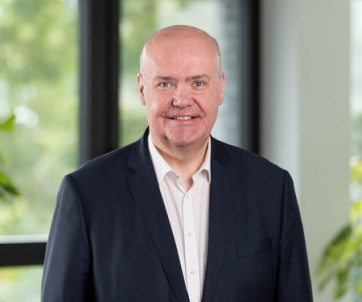
Our Expert
Articles you might also be interested in
Electric Heavy-Duty Transport: From Pilot Project to Nationwide Fast-Charging Network

Data Centers as System Partners of the Energy Transition: Flexibility, Heat, and Renewable Energies
Why decarbonization only works as a system
Decarbonization only works as a system: Eric Stab explains why individual measures are not enough and why integrated solutions are essential.
How Power Purchase Agreements (PPAs) are becoming key to climate neutrality
Green Power PPAs Drive Industrial Decarbonization: An Overview of Opportunities, Challenges, and Regulatory Frameworks.
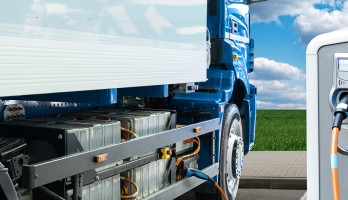
"Downtime Becomes Charging Time" – How PORT OF KIEL is Electrifying Heavy-Duty Transport with ENGIE
How the PORT OF KIEL is expanding charging infrastructure for electric trucks with ENGIE: 400 kW fast charging, AFIR targets, and the future of electric heavy-duty transport.

A decade of change: ENGIE and the path to energy transition
150 years of history, 10 years of ENGIE: a look back at history, people, and the ambition to make the energy transition and climate neutrality measurable.
How data centers actively support the energy transition
Data centers are becoming energy hubs and playing a key role in the energy transition. Discover the opportunities.
Power for heavyweights – How ENGIE Vianeo is driving forward electric mobility for trucks
Find out how ENGIE Vianeo is accelerating truck electromobility in Europe.

Impulse #27: Tackling decarbonization
Taking action on decarbonization: Niklas Wiegand from ENGIE Germany blogs about sustainable solutions for cities, industry, and buildings. Read now!
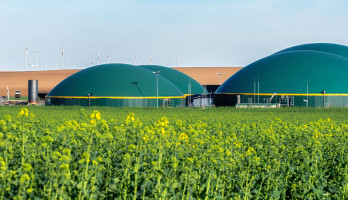
Biomethane – making energy supply climate neutral
Biomethane can make industry, heat supply and mobility more climate-friendly. Read more about this underestimated energy source.