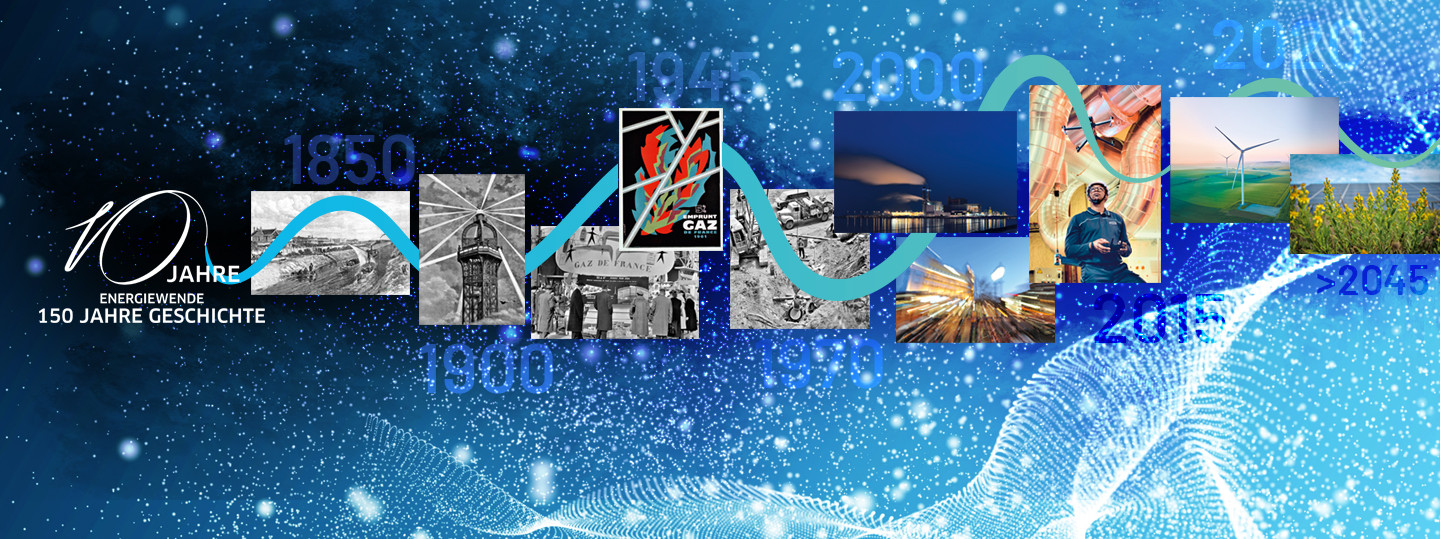
A decade of change: ENGIE and the path to energy transition
In 2015, the Paris Climate Agreement was adopted, awareness of the climate crisis grew – and GDF Suez became ENGIE. The world looked different a decade ago. But the crucial questions were already being asked back then: How can climate protection and a secure energy supply be reconciled? And what responsibility comes with technological progress?
Today, ENGIE is more than just a company. What defines us is a clear vision of how the energy transition can succeed. This anniversary is an opportunity to look back – and to look ahead with clarity.
Looking back: How it all began
For ten years, the name ENGIE has stood for change in the energy sector. However, the story behind it goes back much further. It begins with the dawn of industrialization, major infrastructure projects, and profound changes. Over the years, this has developed into our current focus.
Industrial beginnings in northern Europe
ENGIE's roots lie in 19th-century Belgium, amid the industrial revolution. Gas and electricity projects are shaping the rapid transformation of cities and infrastructure. Energy is becoming a driver of economic development and social progress. In this environment, the desire to combine technical innovations with practical applications develops early on.
Major infrastructure projects and international connections
Parallel to industrial developments in Europ, infrastructure projects of global significance were emerging in the Mediterranean region. The construction of the Suez Canal was one such project. It connected Europe with Asia and the Middle East and brought about lasting changes in economic relations. A new understanding of reach and networking emerged here for the further development of the energy sector – long before ENGIE became visible as a global player.
Energy for growing cities
At the end of the 19th century, energy became tangible in urban areas. The electrically illuminated World's Fair in Paris and the illuminated Eiffel Tower marked the breakthrough of electricity. Cities grew and new ways of living and working emerged. Companies such as Société Lyonnaise des Eaux et Éclairage built gas and electricity networks and secured the supply of modern metropolises. Energy thus became an integral part of everyday life.
Reconstruction and security of supply
After World War II, France faced the task of rebuilding. Energy became a strategic resource, and the state reorganized the sector and nationalized it in 1946. This meant a fundamental upheaval for the gas industry. Many local structures were replaced by new organizations, and supply was planned and expanded centrally. In the 1950s, the discovery of large natural gas reserves accelerated the development of a nationwide network. By the 1970s at the latest, the importance of adaptability became apparent: new import routes and storage capacities were needed to ensure long-term security of supply. These experiences continue to shape how change and dependencies are dealt with today.
These developments gave rise to two major energy players in France and Europe: Gaz de France and Suez.
A new player in the liberalized energy market
The 2000s fundamentally changed the European energy market. Business areas were unbundled and structures reorganized. Gaz de France realigned itself, while Suez developed into an international energy company through targeted acquisitions. In 2008, these developments culminated in the merger of the two groups. GDF Suez emerged as a new player, combining size, experience, and international presence.
The path towards the energy transition
At the beginning of the 2010s, the Group continues to grow and strengthen its international presence. At the same time, the global context is undergoing fundamental change. Climate change and decarbonization are becoming the focus of political and social debate. Investments in renewable energies are gaining importance, the portfolio is broadening, and the strategic orientation is becoming clearer.
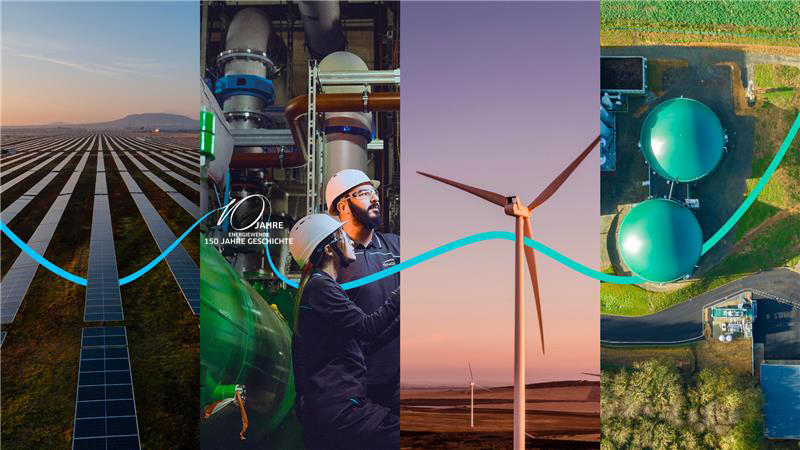
2015–2025: Ten years of ENGIE
The new name reflects the aspiration to no longer view climate protection as an add-on, but as a starting point. In the years that followed, this attitude translated into concrete action. Structures changed, new units were created, and ENGIE also showed a united front in Germany.
Later, a specific goal comes to the fore: climate neutrality. As a task, not a promise. In 2020, ENGIE enshrines this mission in its articles of association: to accelerate the transition to a climate-neutral economy and combine economic performance with a positive impact on people and the environment.
The next step followed a year later. ENGIE ended investments in coal, plans to phase out this energy source by 2027, and is committed to becoming climate neutral by 2045. These are decisions that make the mission concrete—and keep it verifiable in the long term.
Who drives change: people
150 years of history. Ten years of ENGIE. And one strong connection: people. Because the energy transition is not an abstract concept. It takes shape where people plan, build, operate, and take responsibility. Employees, customers, suppliers, and partners form the backbone of this development. ENGIE's strength lies in its local roots. Because the energy transition is largely taking place at the local level.
Value creation is consciously thought through. It is reflected not only in figures, but also in jobs, in the development of industries, in investments in the energy transition, and in an energy supply that remains affordable and accessible.
Today, ENGIE stands for the aspiration to enable progress without losing sight of people. And that is precisely where the power lies to shape change and make it sustainable.
Looking ahead
What the future means at ENGIE is evident in everyday work. In the ideas, questions, and convictions of the people working on the energy transition. Three of them provide insight into their personal visions of the future.
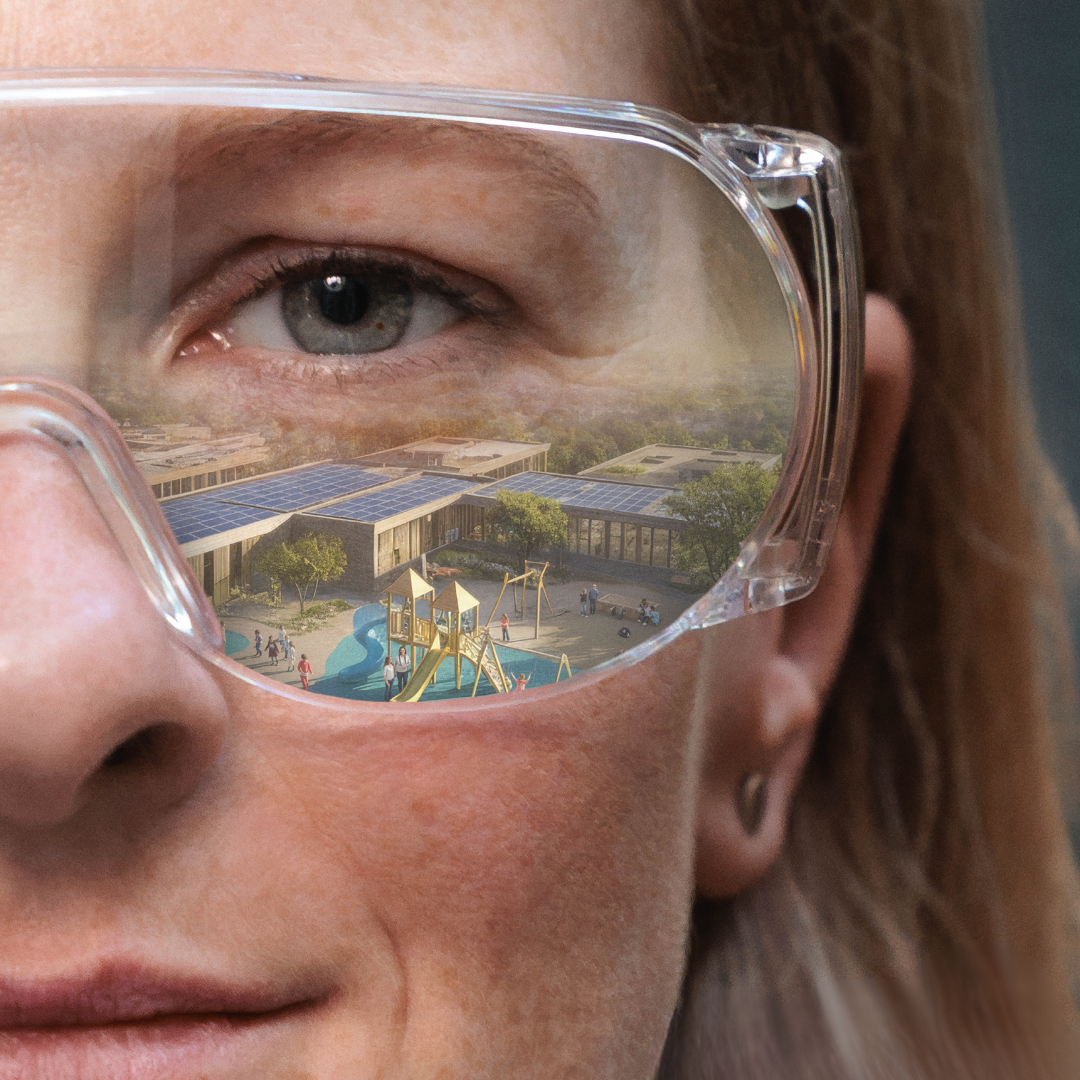
"I envision a future in which every building is designed to achieve its best energy efficiency. A future in which everyone knows how to use energy wisely and in which they contribute collectively to genuine energy sobriety, i.e., energy conservation—which is absolutely necessary to protect our resources and our planet."
Anne Geier, Project Manager for Energy Efficiency, ENGIE Deutschland GmbH
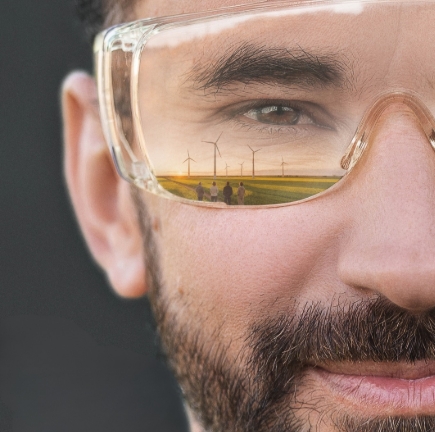
"I dream of a future in which our European wind farms have been renewed and reinforced for the second time – and we are getting even more power out of each location. Another step towards more efficient and respectful energy production."
Adam Janik, Team Leader Project Development, ENGIE Deutschland Erneuerbare GmbH
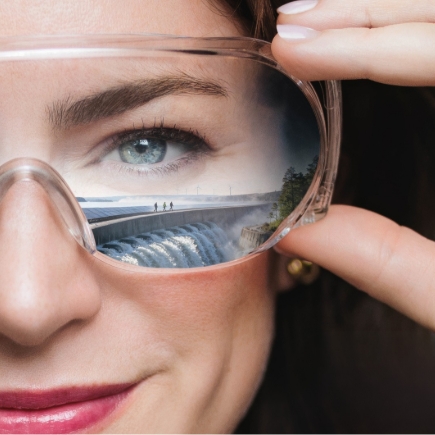
„I see a future in which renewable and flexible energies work in harmony – like a living ecosystem. Every customer will benefit from an hourly adjusted and optimized supply, for fairer and more efficient energy."
Sarah Drevermann, Senior Originator, ENGIE Energy Management Solutions GmbH
A benchmark for the energy transition
ENGIE's history shows that change rarely follows a straight path but pays off when decisions are made with the long term in mind. From its industrial beginnings, infrastructure development, and strategic realignments, a company has emerged that today has a clear position: at the intersection of security of supply, climate protection, and social responsibility.
What remains is a task. The energy transition is a process that must be reviewed daily. The goal of climate neutrality is a benchmark for decisions, investments, and impact. ENGIE will continue to be measured against this benchmark in the coming years—in terms of consistency, implementation, and whether progress remains tangible for everyone.
Your contact for this topic
ENGIE Deutschland GmbH
Articles you might also be interested in
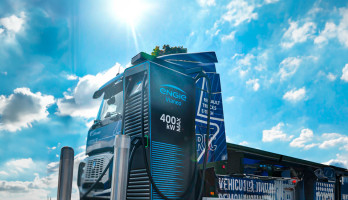
Electric Heavy-Duty Transport: From Pilot Project to Nationwide Fast-Charging Network

Data Centers as System Partners of the Energy Transition: Flexibility, Heat, and Renewable Energies
Why decarbonization only works as a system
Decarbonization only works as a system: Eric Stab explains why individual measures are not enough and why integrated solutions are essential.
How Power Purchase Agreements (PPAs) are becoming key to climate neutrality
Green Power PPAs Drive Industrial Decarbonization: An Overview of Opportunities, Challenges, and Regulatory Frameworks.
"Downtime Becomes Charging Time" – How PORT OF KIEL is Electrifying Heavy-Duty Transport with ENGIE
How the PORT OF KIEL is expanding charging infrastructure for electric trucks with ENGIE: 400 kW fast charging, AFIR targets, and the future of electric heavy-duty transport.

Impulse #28: The Energy Transition Requires Systems Thinking
Energy policy requires systemic thinking: Eric Stab from ENGIE Germany explains how international experience can advance the German energy transition. Read now!
How data centers actively support the energy transition
Data centers are becoming energy hubs and playing a key role in the energy transition. Discover the opportunities.
Power for heavyweights – How ENGIE Vianeo is driving forward electric mobility for trucks
Find out how ENGIE Vianeo is accelerating truck electromobility in Europe.
Impulse #27: Tackling decarbonization
Taking action on decarbonization: Niklas Wiegand from ENGIE Germany blogs about sustainable solutions for cities, industry, and buildings. Read now!
Biomethane – making energy supply climate neutral
Biomethane can make industry, heat supply and mobility more climate-friendly. Read more about this underestimated energy source.