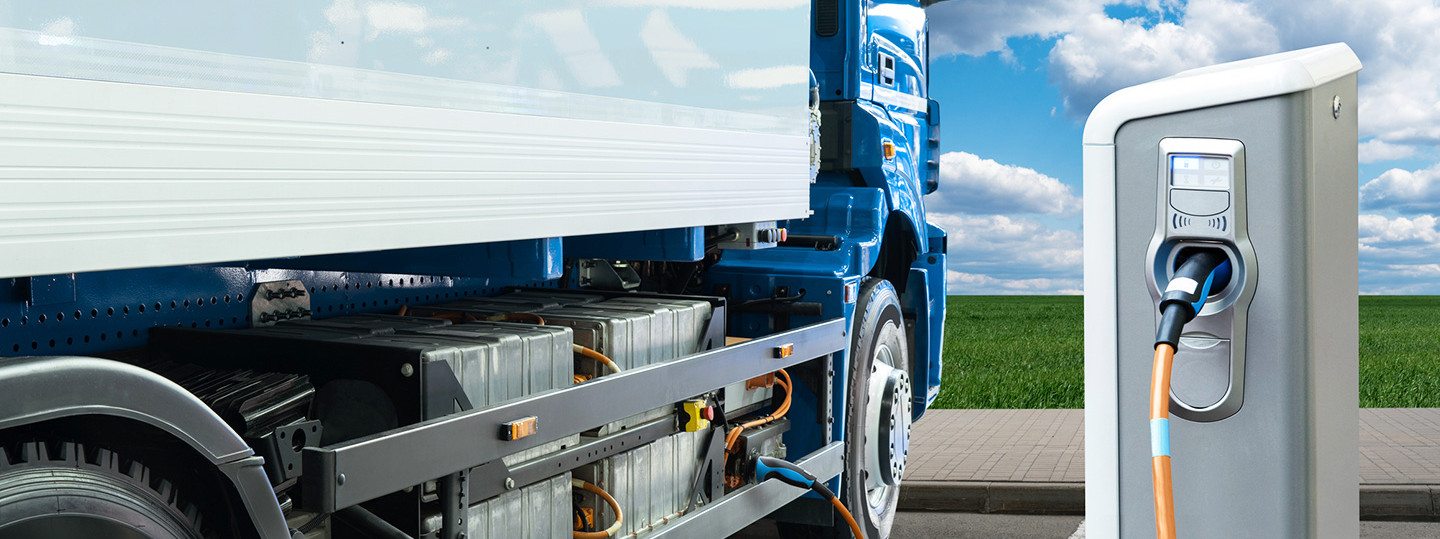
"Downtime Becomes Charging Time" – How PORT OF KIEL is Electrifying Heavy-Duty Transport with ENGIE
The shift toward climate-friendly logistics presents new challenges for ports as central transportation hubs—while also opening up significant opportunities. Together with ENGIE, the PORT OF KIEL is positioning itself early on as a pioneer in the development of high-performance charging infrastructure for electric commercial vehicles. In this interview, Managing Director Dr. Dirk Claus explains why the port has clearly opted for battery-electric solutions, what role high-performance charging points play for freight forwarders, and how Kiel is already meeting tomorrow’s European requirements today.
Charging Infrastructure as the Key to Electric Heavy-Duty Transport
Dr. Claus, why is the PORT OF KIEL building charging infrastructure for commercial vehicles?
“As a logistics hub, the port is a place where many transport routes converge. Trucks arrive here from Scandinavia or the Baltic states and continue their journey to Europe, or they come from other European countries or Germany and want to ship their goods to Scandinavia or the Baltic states. We are also seeing an increasing number of heavy-duty vehicles with electric drives coming to our port, which would like to use their waiting time to recharge their batteries so they can continue their journey.
By installing charging stations in our publicly accessible port areas, we are providing these customers with a charging option that has previously been available only to a limited extent at German highway rest stops. Thus, the ENGIE charging infrastructure in Kiel supports the transition to electric powertrains in heavy-duty transport. Sustainable electric heavy-duty transport will only become widespread once a corresponding charging network is available on a large scale. The PORT OF KIEL and ENGIE are doing their part to further expand this network.”
Why are you focusing on electrification rather than hydrogen or biomethane?
“Compared to other alternative propulsion systems, the electrification of heavy-duty transport has established itself as the technology of choice. Technical advances in battery-electric technology have already reached market maturity and achieve levels of efficiency that other technologies, such as hydrogen or biomethane, unfortunately cannot match. Additionally, supplying electric trucks with electricity is also the most economically attractive option for customers compared to other alternatives, which is why we have chosen this option for ourselves in Kiel.”
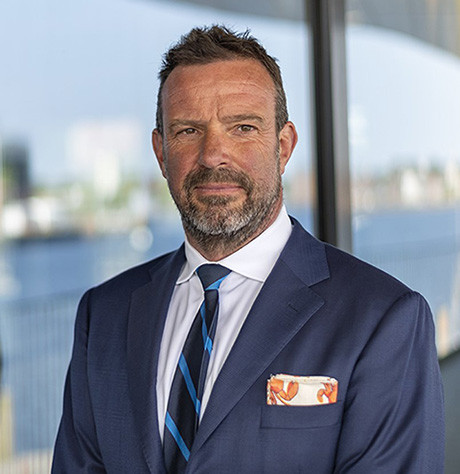
Dr. Dirk Claus has been Managing Director of SEEHAFEN KIEL GmbH & Co. KG (PORT OF KIEL) for many years and is a leading expert in sustainable port development and modern logistics. Since 2006, he has been responsible for the strategic direction of the PORT OF KIEL and is particularly driving the decarbonization of port operations, the expansion of shore power, and future-proof logistics concepts. In this interview, he explains how the PORT OF KIEL is expanding its charging infrastructure for electric trucks with ENGIE.
Picture: © PORT OF KIEL
Efficiency in Port Operations: When Downtime Becomes Charging Time
What role do the new charging points play for freight forwarders—and what does “up to 400 kW” mean in practice for turnaround times?
“As the PORT OF KIEL, we have a lot of truck traffic that spends some time in our port before boarding. This time is generally downtime during which the truck, which is in operation around the clock, cannot perform any other work. For this reason, this time is ideal for charging trucks—‘downtime becomes charging time.’
And for this reason, the ENGIE charging infrastructure at Norwegenkai and Ostuferhafen is very important for our freight forwarders and will act as a catalyst for the transition to electric trucks for all units passing through the PORT OF KIEL. We have already received initial indications from freight forwarders that, due to the soon-to-be-available charging infrastructure, they will make a detour via Kiel to recharge their electric trucks here.
“400 kW means that an electric truck can be charged from 20% to over 80% within 20 to 40 minutes, depending on the battery size.”
Regulation as a Driver – AFIR and the Role of Partnerships
How does the cooperation with ENGIE help meet AFIR requirements early on?
“Through AFIR, the EU requires its member states to ensure a minimum supply of charging points for heavy-duty electric vehicles. To this end, binding charging targets for the years 2025 through 2030 have been set for member states, which they are required to meet.”
Specifically for ports as urban hubs, regulations require that, by December 31, 2025, publicly accessible charging points for heavy-duty electric commercial vehicles with a total charging capacity of at least 900 kW (1,800 kW by December 31, 2030) be installed at every urban hub.
The ENGIE-PORT OF KIEL charging stations, which will go online in 2026, meet the AFIR requirements. At Ostuferhafen, the four charging stations have a combined charging capacity of 1,200 kW, and the two charging stations at Norwegenkai provide a total of 600 kW of charging capacity. This means that, as early as the beginning of 2027, a total of 1,800 kW of charging capacity will be available for electric heavy-duty vehicles in the PORT OF KIEL”
Why did you choose ENGIE as a partner?
“With its business model in France, ENGIE already has extensive experience in planning and implementing charging parks for heavy-duty vehicles. ENGIE is present at nearly all highway rest stops in France, and the company aims to expand this presence.
As the PORT OF KIEL we are pioneers in this field with our first charging stations and want to rely on an experienced partner who can work with us to drive this initiative forward in Germany.”
Looking Ahead: Expansion and Megawatt Charging
What’s next leading up to the 2026 opening—and how will the charging park be expanded in the future?
“Before the opening of the first ENGIE charging park at Ostuferhafen, some construction work is still necessary, such as connecting the charging park to the upstream grid of Stadtwerke Kiel, erecting the transformer station, and installing and connecting the charging points.
The ENGIE charging park is designed and prepared in such a way that, as megawatt charging becomes more established in the market, the charging park can be retrofitted accordingly, so that the latest state-of-the-art technology can then be offered to customers in Kiel as soon as it has become widely adopted.”
When downtime becomes charging time: A model with a future
With the expansion of high-performance charging infrastructure, the PORT OF KIEL is sending a strong signal for the future of emission-free heavy-duty transport. The strategic partnership with ENGIE makes it possible to meet regulatory requirements early on while simultaneously creating concrete added value for freight forwarders. The approach of efficiently using existing downtime for charging demonstrates in a practical way how the transformation in the logistics sector can succeed.
Our Expert
Articles you might also be interested in
Electric Heavy-Duty Transport: From Pilot Project to Nationwide Fast-Charging Network

Data Centers as System Partners of the Energy Transition: Flexibility, Heat, and Renewable Energies
Why decarbonization only works as a system
Decarbonization only works as a system: Eric Stab explains why individual measures are not enough and why integrated solutions are essential.
How Power Purchase Agreements (PPAs) are becoming key to climate neutrality
Green Power PPAs Drive Industrial Decarbonization: An Overview of Opportunities, Challenges, and Regulatory Frameworks.

Impulse #28: The Energy Transition Requires Systems Thinking
Energy policy requires systemic thinking: Eric Stab from ENGIE Germany explains how international experience can advance the German energy transition. Read now!

A decade of change: ENGIE and the path to energy transition
150 years of history, 10 years of ENGIE: a look back at history, people, and the ambition to make the energy transition and climate neutrality measurable.
How data centers actively support the energy transition
Data centers are becoming energy hubs and playing a key role in the energy transition. Discover the opportunities.
Power for heavyweights – How ENGIE Vianeo is driving forward electric mobility for trucks
Find out how ENGIE Vianeo is accelerating truck electromobility in Europe.

Impulse #27: Tackling decarbonization
Taking action on decarbonization: Niklas Wiegand from ENGIE Germany blogs about sustainable solutions for cities, industry, and buildings. Read now!
Biomethane – making energy supply climate neutral
Biomethane can make industry, heat supply and mobility more climate-friendly. Read more about this underestimated energy source.