From Volatility to Supply Security: Why Battery Storage Becomes the Backbone of a Decarbonized Energy System
Wind and solar power are expanding rapidly in Germany. But renewable electricity fluctuates – and the energy system increasingly needs flexibility. In this interview, John Diklev, Founder and CEO of Flower, and Daniel Schwarz, Senior Structured Originator at ENGIE, explain how battery storage turns volatility into security of supply and economic value.
The Problem
Germany is massively expanding wind and solar energy. Why is this alone not enough?
John Diklev: “More affordable, renewable generation is essential, but generation alone doesn’t solve the energy transition. The challenge is that wind and solar are inherently variable: sometimes we produce more electricity than the system needs, and sometimes we produce less.
As Germany adds more renewables, that variability increases the need for flexibility – the ability to shift electricity across time and respond quickly to changes in supply and demand.
That is where solutions like battery storage become critical. Instead of curtailing renewable electricity when there is too much production, we can store it and make it available when the system needs it. In that sense, the next phase of the energy transition is not only about producing more renewable energy, but about managing it intelligently and economically, getting more from less.”
Why Battery Storage?
Many people associate battery storage primarily with grid stability. What other functions do they fulfill today?
John Diklev: “Grid stability is an important part of the picture, but batteries can do much more. They are flexible assets that can participate across several electricity markets simultaneously.
For example, batteries can charge when electricity is abundant and prices are low, and discharge when electricity is scarce and prices are higher. That creates value through energy arbitrage. More broadly, storage helps shift renewable energy across time – absorbing excess generation instead of curtailing it.
The real value comes from combining these different applications, which also reduces the uncertainties in power markets and, by extension, risk premiums. With sophisticated trading and optimization, a battery can continuously move between markets and revenue streams depending on where its flexibility creates the most value. That makes storage both an important tool for integrating renewables and an increasingly important commercial asset.”
Daniel Schwarz: “As an energy supplier, we actively drive the energy transition and manage flexibility at gigawatt scale across Europe. From our perspective, the real value lies in connecting individual assets into a broader portfolio. A single battery operates locally, but when integrated into a continental footprint – such as ENGIE’s expanding European BESS portfolio – it becomes a powerful system-wide stabilizer.
By combining large-scale storage with our renewable generation and algorithmic trading desks, we manage physical flows more efficiently, compress market risk premiums, and deliver clean power precisely when needed. This transforms BESS from a localized technical asset into a cornerstone of portfolio-wide decarbonisation, security of supply, and competitive energy management.”
The Marketing Question
Many storage projects are defined by their technical size. Why does marketing actually determine their economic success?
Daniel Schwarz: “Unlike solar and wind, whose value is largely driven by the weather, storage requires continuous decision-making. A battery does not create value simply by being installed. Its performance depends on deciding when to charge, when to discharge, which markets to access, and how to manage the asset over its lifetime. This is what we mean by optimisation.
These decisions must reflect changing market conditions, liquidity, volatility, and price signals, as well as the battery’s technical characteristics, including availability, efficiency, and degradation. Storage is therefore not an invest-and-forget asset. It requires active management every second of the day, which is why algorithmic trading and strong operational expertise are so important.
But optimisation alone is not enough. To make a storage project investable and scalable, the relevant risks must be understood, priced, and clearly allocated. In this sense, marketing makes flexibility economically viable: The terms under which that flexibility is accessed help determine its economic success from the outset.”
Volatility as Opportunity
Electricity price volatility is often described as a risk. Why can it also be an economic driver for flexibility solutions?
John Diklev: “Volatility is a challenge if you cannot respond to it. If you have flexibility, it becomes an opportunity. Which is why affordable, renewable yet volatile generation is a great match to pair with storage.
As more weather-dependent generation enters the system, electricity supply increasingly fluctuates. That can create larger differences between periods of abundant electricity and periods of scarcity, and therefore stronger price signals.
Storage can react to those signals. It can absorb electricity when there is excess supply and make it available again when demand and value are higher. So increasing volatility strengthens the economic case for flexibility.
From Flower’s perspective, this is the fundamental connection: volatility creates a need for flexibility, and intelligently optimized flexibility turns that volatility into value.”
Daniel Schwarz: “For ENGIE, this is where the system and commercial perspectives meet. Price signals create an incentive for flexible assets to respond when the power system needs them most. With the right market access, optimisation capability, and risk management, batteries can help convert renewable volatility into managed flexibility.”
Industrial Customers
What does this development mean for energy-intensive companies?
Daniel Schwarz: “For energy-intensive companies, this matters for four reasons: energy prices, supply security, decarbonisation, and competitiveness.
As renewable generation grows, power prices will increasingly reflect periods of surplus and scarcity. Battery storage can absorb renewable electricity when it is abundant and make it available again when it is needed. This supports a power system that is not only more flexible and efficient, but also more renewable and robust.
For industrial customers, however, the value does not lie in a battery as a stand-alone solution. It lies in connecting storage, renewable generation, optimisation, and demand through structured power solutions.
In practical terms, this means shaping electricity supply around how a customer actually consumes power. Long-term baseload supply can be complemented by flexibility, predefined load curves can be protected against selected spot-price peaks, and exposure can be adjusted during the hours when volatility matters most. Structured solutions can also help renewable developers manage risks such as negative prices during periods of peak generation.
The principle is simple: Instead of asking customers to adapt completely to the volatility of the energy system, we use flexibility and commercial structuring to make the energy system work better for their demand.
Ultimately, Europe’s industrial competitiveness depends on renewable electricity being not only cleaner, but also available, manageable, and economically viable when it is needed.”
Germany 2030
Looking ahead to 2030: What role will battery storage play in the German energy system?
John Diklev: “By 2030, I think we will stop looking at batteries as an add-on to the energy system. They will be part of its core infrastructure.
Germany is adding large amounts of wind and solar while conventional generation is being phased out. That means the system will become increasingly dependent on flexibility – not only to balance the grid, but to move energy from when it is produced to when it is actually needed.
From Flower’s perspective, batteries will become one of the key pieces of flexibility infrastructure that allows Germany to build significantly more renewables while keeping electricity reliable, affordable, and available when it is needed. And importantly, long-term commercial structures will be needed to make that storage capacity bankable and scalable.”
Daniel Schwarz: “I can only agree with John here. By 2030, I expect flexibility to be one of the defining features of Germany’s energy system. We will not only need more renewable generation, but also the ability to respond to changing production, demand, and market conditions at every moment.
For me, the key question is not whether batteries will play a role. They will. The question is how effectively we integrate them into a wider flexibility portfolio. This requires sophisticated optimisation, reliable market access, long-term offtake structures, and clear risk management.
That is where ENGIE can contribute as an energy-transition utility: by connecting renewable generation, storage, trading, structured offtake, and customer demand. Our objective is to turn flexibility into a reliable and scalable resource, supporting a more secure, competitive, and decarbonised energy system.”

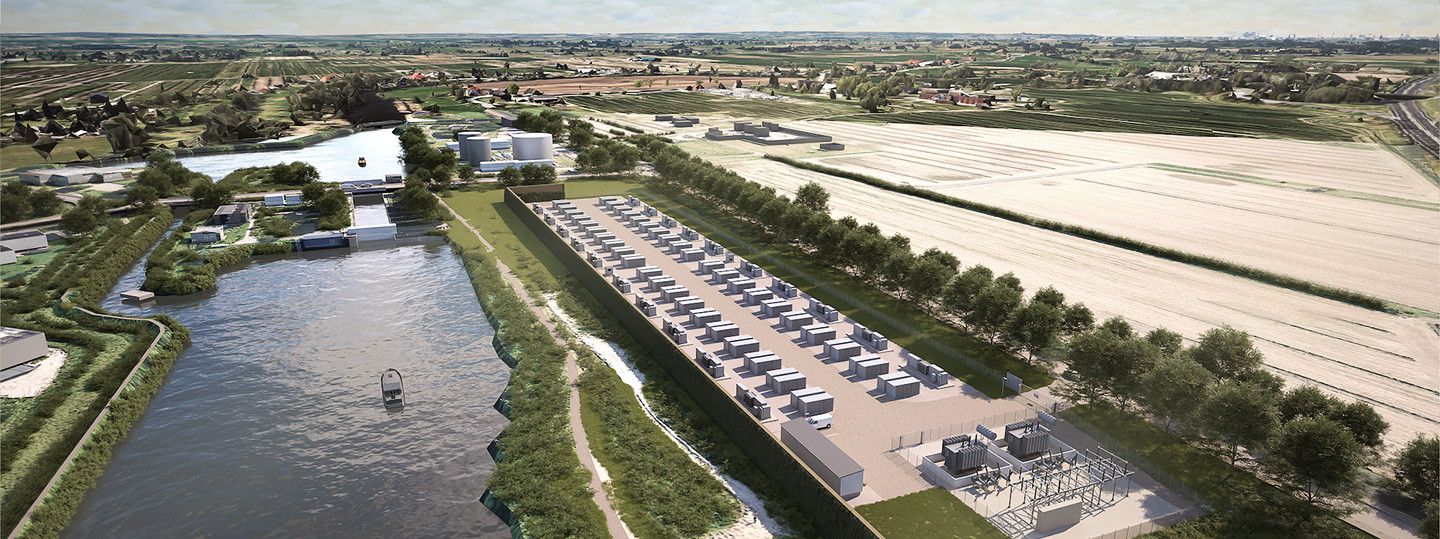
A new building block for the city’s energy infrastructure is taking shape in Hamburg-Bergedorf: On 9 September 2026, the Swedish energy-tech company Flower began building a battery energy storage system (BESS) with 100 megawatts of power and 400 megawatt-hours of capacity. The facility will be Hamburg’s largest battery storage system and, to the best of current knowledge, the largest battery storage system within a major German city. Commissioning is planned by the end of 2028.
The four-hour system is designed to help stabilise the power grid, use renewable energy more efficiently, and better integrate generation peaks from wind and solar power into the energy system.
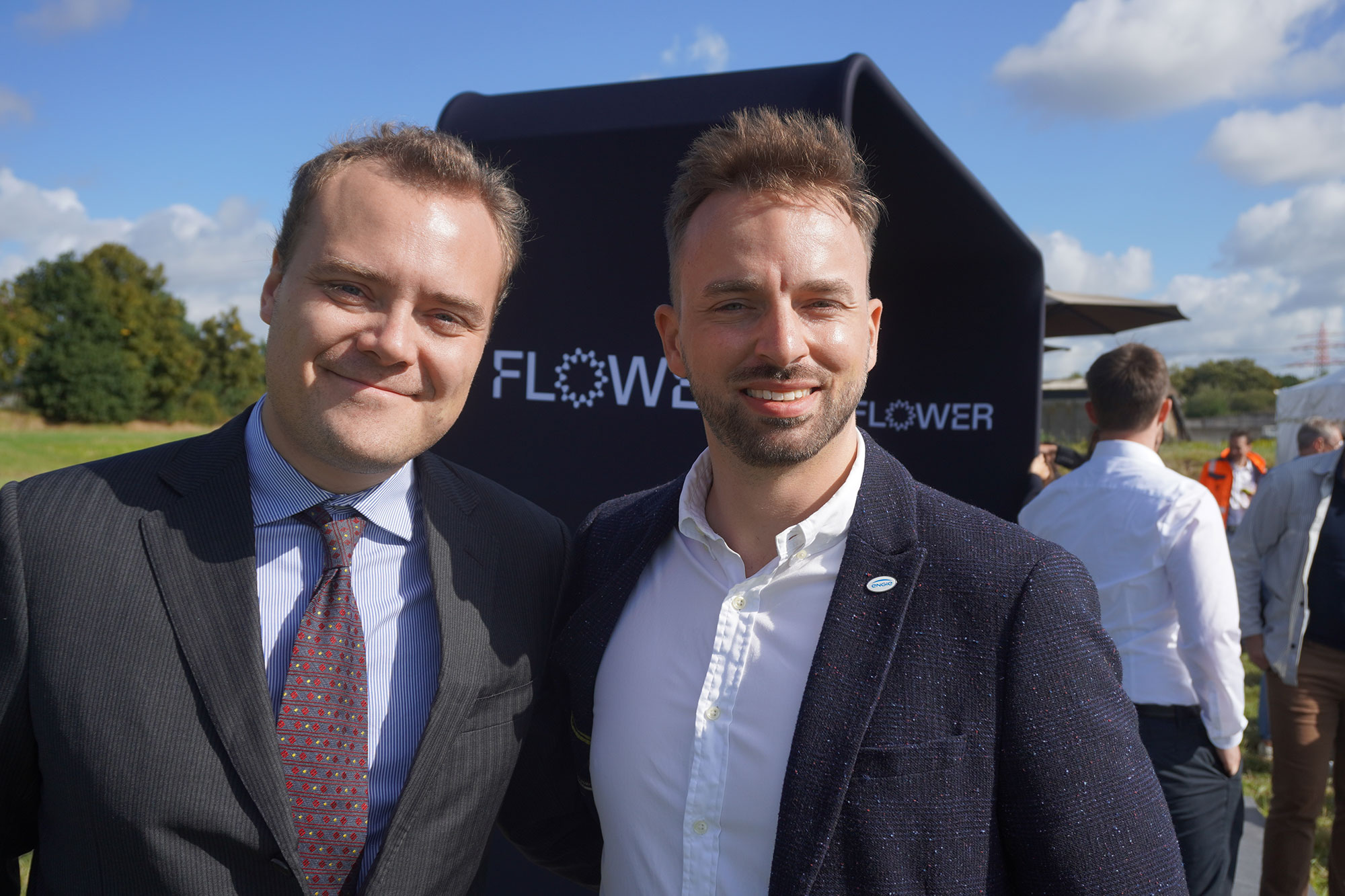
Picture, left to right: Tobias Heyen, Head of Origination Germany, ENGIE Energy Management Solutions GmbH; Katharina Fegebank, Second Mayor of the Free and Hanseatic City of Hamburg and Senator for Environment, Climate, Energy and Agriculture; John Diklev, Founder and CEO of Flower; Rolf Strittmatter, CEO of Hamburg Invest.
ENGIE is a long-term project partner of Flower and supports the project with a Flexibility Purchase Agreement (FPA), also known as a virtual tolling agreement. Once the facility is operational, ENGIE will support the marketing of the storage system on the German energy market.
“This groundbreaking marks an important step in expanding scalable flexibility infrastructure in Germany,” says Tobias Heyen, Head of Origination Germany at ENGIE.
About Flower: Flower is the Nordic market leader in the optimisation and marketing of energy assets. Through its AI-powered platform, the company trades, optimises, and markets flexible energy assets. Flower’s publicly announced German BESS portfolio currently comprises more than 300 MW; the first German assets are scheduled to go into operation in early 2027.
Articles you might also be interested in
Electric Heavy-Duty Transport: From Pilot Project to Nationwide Fast-Charging Network

Data Centers as System Partners of the Energy Transition: Flexibility, Heat, and Renewable Energies
Why decarbonization only works as a system
Decarbonization only works as a system: Eric Stab explains why individual measures are not enough and why integrated solutions are essential.
How Power Purchase Agreements (PPAs) are becoming key to climate neutrality
Green Power PPAs Drive Industrial Decarbonization: An Overview of Opportunities, Challenges, and Regulatory Frameworks.
"Downtime Becomes Charging Time" – How PORT OF KIEL is Electrifying Heavy-Duty Transport with ENGIE
How the PORT OF KIEL is expanding charging infrastructure for electric trucks with ENGIE: 400 kW fast charging, AFIR targets, and the future of electric heavy-duty transport.
Impulse #28: The Energy Transition Requires Systems Thinking
Energy policy requires systemic thinking: Eric Stab from ENGIE Germany explains how international experience can advance the German energy transition. Read now!

A decade of change: ENGIE and the path to energy transition
150 years of history, 10 years of ENGIE: a look back at history, people, and the ambition to make the energy transition and climate neutrality measurable.

How data centers actively support the energy transition
Data centers are becoming energy hubs and playing a key role in the energy transition. Discover the opportunities.
Power for heavyweights – How ENGIE Vianeo is driving forward electric mobility for trucks
Find out how ENGIE Vianeo is accelerating truck electromobility in Europe.
Impulse #27: Tackling decarbonization
Taking action on decarbonization: Niklas Wiegand from ENGIE Germany blogs about sustainable solutions for cities, industry, and buildings. Read now!