Impulse #29: Sovereignty begins in the electricity system
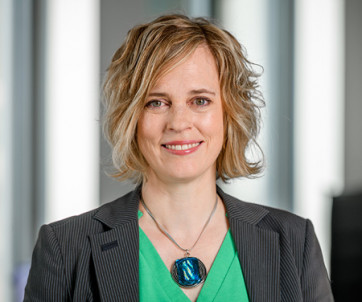
The first stage of the energy transition was a question of megawatts. The next stage will be a question of intelligence. With renewables at times accounting for more than 60 per cent of electricity in the grid, timing is more important than sheer volume. In the latest issue of ‘Impulse’, Katrin Fuhrmann, Executive Board Member for Energy Management at ENGIE Deutschland AG, explains why flexibility is set to become the currency of this decade and how ENGIE Deutschland is already shaping the smart energy world today.
“The key question has shifted. It used to be: ‘How do we get more megawatts onto the grid?’ Today, the focus is on: ‘How do we get the right megawatts to the right place at the right time?’ That is flexibility – the currency of this decade.”
What if too much electricity from renewable energy installations becomes a problem? 1 May 2026 provided a striking answer to this question and offered a glimpse of the new energy landscape. It was a public holiday in Germany, so industry had come to a standstill, and by midday there was an abundance of solar power available. The result: the price on the electricity exchange plummeted at midday to minus 500 euros per megawatt-hour, the regulatory floor price. By the evening, it had climbed back up to over 200 euros – a spread of more than 700 euros per megawatt-hour in a single day. Germany was thus in good company across Europe, as eight bidding zones closed at this level on the same day. Just over a year earlier, the opposite scenario had unfolded: on 12 December 2024, light winds met overcast skies and a cold late afternoon – a classic ‘Dunkelflaute’, a period of low wind and solar generation. As a result, the price rose to more than 900 euros per megawatt-hour in the early evening, with the entire fleet of controllable power stations in operation. The Federal Network Agency and the Federal Cartel Office investigated the situation for months and then confirmed: the shortage was real, and the market was functioning properly. So it was the same rollercoaster ride, only the signs were reversed. To me, these two days reveal, as mirror images, an energy system that is crying out for greater flexibility.
From Expansion to Systems Thinking
For years, the energy transition followed a clear logic: more generation, more grid capacity, more expansion. This logic remains sound. By 2025, renewables were already accounting for around 56 per cent of electricity generation in Germany (source: Fraunhofer ISE, Energy-Charts); they are a tangible success story. However, the higher their share rises, the more pressing another challenge becomes: aligning generation and consumption in terms of timing. The key question for the electricity system is no longer: ‘How do we get more megawatts onto the grid?’ Today, it is more precisely: ‘How do we get the right megawatts to the right place at the right time?’ The key to the energy system of the future is flexibility. This has only an indirect connection to 24/7 supply contracts for green electricity. At its core, it is about the stability of our electricity system.
“The race for artificial intelligence is now a race for megawatts. Whoever can provide gigawatt-hours quickly, with low emissions and in a predictable manner will determine where the future is built.”
Flexibility is the currency of this decade
First, some context. The flexibility gap in the German electricity system is currently around 40 times the size of our installed battery fleet. This brings us to the question of where additional flexibility in the system can come from. I see at least three sources here:
- Firstly, storage. Battery storage systems absorb electricity precisely during the hours when its value falls to near zero or turns negative, and feed it back into the grid when it costs several times as much. By 2030, we in Germany will need many times the capacity currently installed.
- Secondly, industry. German industry alone can shift loads on the scale of several large power stations, provided the incentives are right and the grids can translate the price signal in real time. This puts the smart meter roll-out at the centre of attention: it is the fundamental prerequisite.
- Thirdly, data centres – the real game-changers. Their electricity consumption will double by 2030. Today, we view them one-dimensionally as mere electricity consumers. Yet they are currently evolving into active system players with flexible loads, their own storage facilities and 24/7 contracts for green electricity. As natural anchor customers, they embody precisely the flexibility infrastructure that we now need to build into the system.
Energy determines where the future will be built
What is the crux of the matter? Energy is the key competitive factor of this decade. It determines whether the next factory will be built in Germany or in Texas. Whether the next data centre will go live here or in Virginia. Whether Europe remains a key player in the race for artificial intelligence or becomes a mere bystander. Because today, the race for artificial intelligence is a race for megawatts. Alongside research, one question in particular will determine where the next generation of models is trained: who can provide gigawatt-hours quickly, with low emissions and with sufficient predictability? Europe holds a strong hand here, with a comparatively low-emission electricity mix, a robust grid and a serious expansion of storage capacity. All these decisions are being made now, well before 2030. For the situation in 2030 – with the challenges mentioned regarding data centres, storage, grid connections and energy contracts – will be shaped by the course set today.
Data is the new base load: the market supports it
As the German platform for ENGIE Supply & Energy Management’s international trading division, my team and I see first-hand every day how value creation is shifting. Anyone who optimises a portfolio comprising generation, storage and customer loads today gains a competitive edge through the quality of their forecasts, the offsetting of risks and the speed of their decision-making. Physical assets remain indispensable. However, it is the quality of forecasts and the speed of decision-making that determine the competitive edge. The value of a storage facility arises from skilful manoeuvring between the day-ahead market, intraday trading and balancing energy, constantly seeking out price differentials to smooth out market peaks. The encouraging thing here is that the German battery market is growing without subsidies and yet ranks as the most dynamic in Europe. It is driven by the willingness of major players such as ENGIE to enter into fixed-price flexibility contracts (Flexibility Purchase Agreements / FPAs). It is precisely these contracts that make storage bankable, as they translate market risk into a financeable cash flow curve. ENGIE Deutschland signed the first such contract on the German market in 2024. And the model is spreading: for example, in early 2026, ENGIE and Return, an independent provider of energy storage solutions, signed a long-term flexibility agreement (virtual Flexibility Purchase Agreement / vFPA) covering 100 megawatts for the German market, which will come into force from 2027. And just a few weeks ago, in June 2026, we concluded a seven-year virtual Flexibility Purchase Agreement (FPA) with the energy technology company Flower Infrastructure Technologies AB, which, from January 2029, will cover 126 megawatts of flexibly deployable capacity from battery energy storage systems (BESS) in Germany. Such contracts demonstrate how the market organises and finances flexibility. This capability is increasingly crucial to the stability of our entire energy system.
Resilience is now a European concept
Looking back over recent years, one thing is clear: after the crisis is before the crisis. The coronavirus pandemic, the war in Ukraine and the conflict in the Middle East, as well as the tensions in the energy markets, all bear this out. The next shock is bound to come; only the date and location remain to be seen. Resilience is therefore an absolute must. Yet today, resilience can only be achieved at a European level. The German electricity system has long been part of a European energy market in which prices, electricity flows and grid bottlenecks have cross-border effects. 1 May 2026 was a European event, extending far beyond Germany’s borders. Anyone who wishes to act with autonomy must think European: whether in relation to the grid, market design or industrial policy. A flexible, largely decarbonised and European-minded electricity system provides the most robust safeguard for our industrial base.
The future of energy is smart
Dear readers, as you can see, the real challenge no longer lies in expanding individual plants. It lies in intelligently coordinating generation, storage, grids and demand to form a system capable of responding to supply and demand in real time. Undoubtedly, this task remains challenging, but the opportunities offered by a smart energy world are immense. The window of opportunity is still open, but it is narrowing. What matters now is the course we set together for security of supply, competitiveness and climate neutrality. I’d be interested to hear: where do you see the greatest opportunities, and what questions are on your mind regarding flexibility as the currency of the decade? I look forward to exchanging views with you on LinkedIn or by email!
Yours,
Katrin Fuhrmann
Executive Board Member for Energy Management at ENGIE Deutschland AG
Our Expert