ENGIE Germany Commissions Local Heating Network in Tettnang
- ENGIE Germany and Regionalwerk Bodensee are gradually putting the Tettnang local heating network into operation after just 14 months of construction
- The new sports hall at Manzenberg, the Carl-Gührer-Halle, and the high school are the first buildings to receive heat from locally sourced wood chips
- ENGIE Germany was responsible for the construction of the heating plant and the district heating network; Regionalwerk Bodensee is taking over operations
Cologne – The Tettnang local heating network is gradually coming online: Since mid-September 2026, the first hot water has been flowing to heat the first connected buildings. After 14 months of construction—and thus faster than planned—ENGIE Germany and Regionalwerk Bodensee have reached a key milestone for the town’s heat supply. The project is supported by the joint venture Wärmeversorgungsgesellschaft Tettnang mbH, in which each partner plays a clear role: ENGIE Germany organized the construction of the heating plant and the heat distribution network, thereby laying the groundwork for safe and reliable operation. Regionalwerk Bodensee will now take over the operational management of the heating plant and the pipeline network, as well as advising customers on heat supply contracts and energy billing. Steffen Haller, Head of Projects in the Energy Solutions division at ENGIE Deutschland and Managing Director of Wärmeversorgungsgesellschaft Tettnang, says: “Tettnang demonstrates how the municipal heating transition can succeed in practice and how a heating infrastructure can be created that strengthens the community in the long term. By combining ENGIE Deutschland’s many years of experience with the local presence of our partner, Regionalwerke Bodensee, we are driving the heating transition forward on the ground.”
Tettnang on the Path to a Sustainable Heat Supply
The launch of the heating system lays the foundation for a heating infrastructure in Tettnang that can be expanded over the long term. Already connected are the sports hall at Manzenberg, the Carl-Gührer-Halle, the high school, and the first private buildings. Additional private, commercial, and public buildings on the Manzenberg school campus and in the city center—including the historic town hall—will be connected gradually. The heating system is powered by two biomass boilers. The fuel consists of wood chips made from wood waste, all of which comes from the region within a radius of up to 100 kilometers. A buffer storage tank supports the supply during periods of increased demand, and a gas boiler is also available for emergency operation. Through this concept, ENGIE Deutschland and Regionalwerk Bodensee in Tettnang can save more than 4,000 metric tons of CO₂annually compared to fossil fuels. Michael Hofmann, Managing Director of Regionalwerk Bodensee and Managing Director of Wärmeversorgungsgesellschaft Tettnang, emphasizes: “With the commissioning of the Tettnang local heating system, a significant step has been taken toward a sustainable heat supply for the city. Following the successful construction phase, the focus is now on the reliable operation of the plant. We are pleased to move this important project into its next phase.”
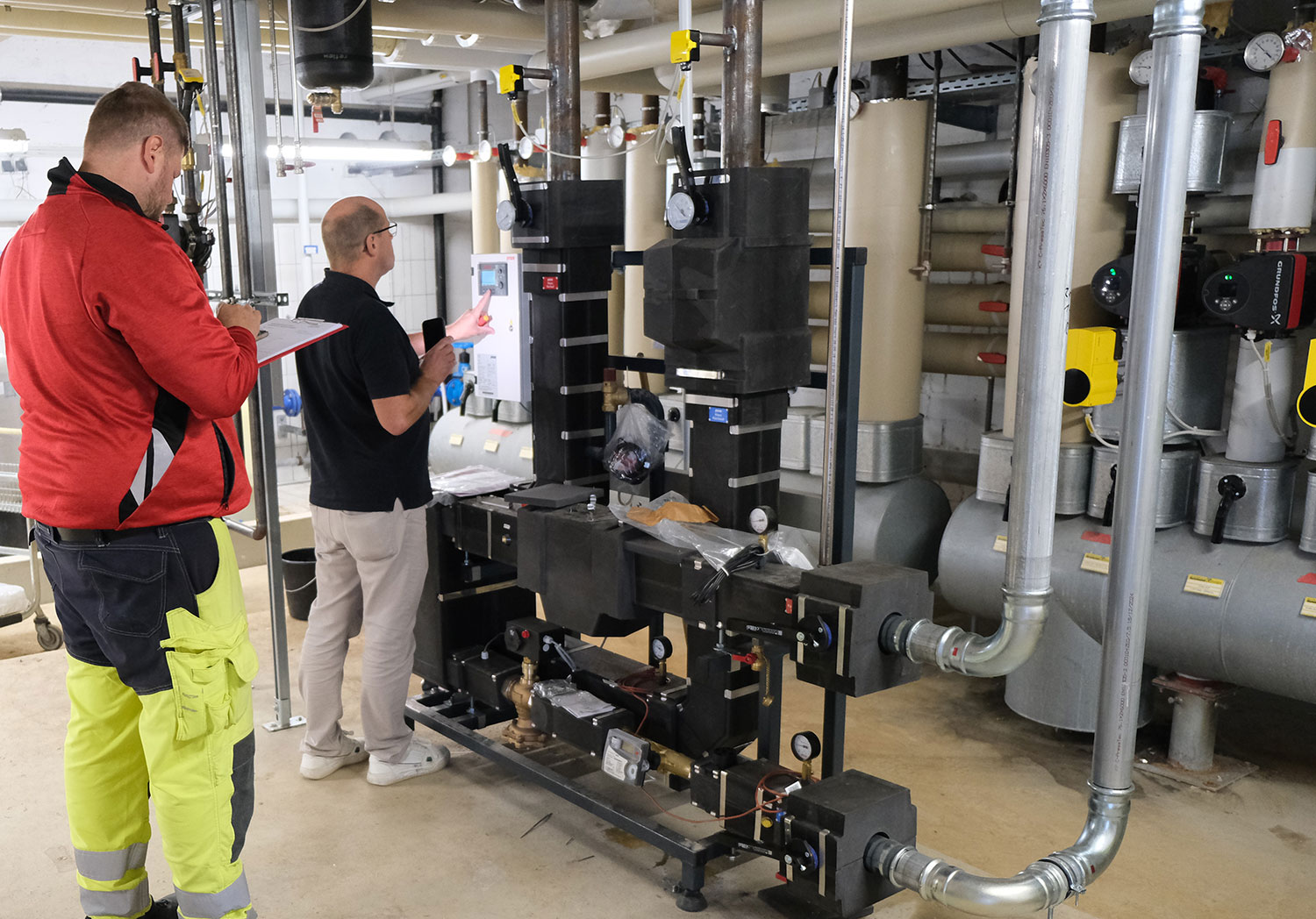
A milestone for the Tettnang local heating system: ENGIE Deutschland and Regionalwerk Bodensee have connected the first buildings—including the high school—to the supply network. The project demonstrates how municipal heat supply can be achieved in a renewable and secure manner.
Your contact
ENGIE Deutschland GmbH